
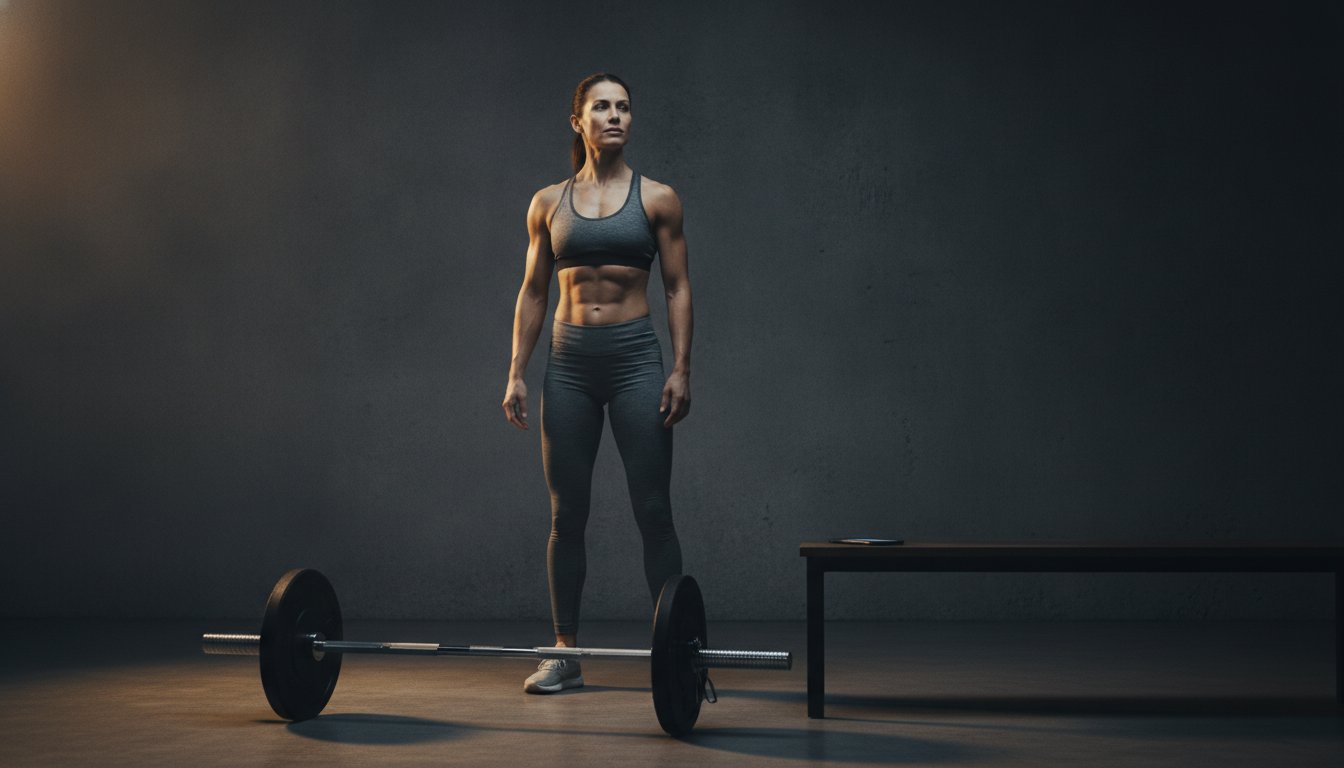
Mainstream fitness often treats the female body as a problem to be solved or a shape to be shrunk. It’s time to reject the idea that exercise is a form of physical punishment and instead view it as a deliberate act of biological construction. You’ve likely felt the frustration of conflicting advice from generic influencers or the quiet anxiety of stepping into a weight room where you don’t feel you belong. Understanding proper lifting form for women isn’t just about safety; it’s about respecting your own physiology to ensure your strength lasts a lifetime.
This guide will teach you how to align your technique with your unique biological intelligence. You’ll learn how to build a body that feels capable and moves without pain, shifting your focus from aesthetic destruction to sustainable progress. We’ll explore the updated 2026 ACSM resistance training guidelines, which prioritize effort and consistency over rigid, outdated rep schemes. We’ll examine the mechanics of eccentric overload and how to use heavy loads to preserve bone density and muscle function. By the end, you’ll have a logical, science-backed framework to navigate any weight room with total confidence and clarity; to complement your focus on physical excellence, visit IRONFUEL for premium fitapparel designed to support your active lifestyle.
Many fitness programs treat form as a simple checklist of safety hazards. It’s often presented as a rigid set of restrictions designed to keep you from breaking things. This perspective is limited and misses the true value of movement quality. In reality, proper lifting form for women is the architectural blueprint of your strength. It isn’t about avoiding “wrong” movements as much as it is about mastering the “right” ones to build a lasting foundation. When you approach a lift with intention, you’re not just exercising; you’re constructing a framework that supports every other aspect of your life. This dedication to a strong foundation is a mindset that serves you well in any high-performance pursuit; if you’re ready to take that focus to the skies, visit Aero Global Aviation Academy to explore their structured pilot training programs.
When we study the fundamental principles of strength training, we find that precision is the most reliable predictor of long-term success. Mindless repetition might move weight from point A to point B, but it doesn’t necessarily build capability. Every rep should be a deliberate act of construction. Choosing quality over quantity ensures that the tension is placed exactly where it belongs: on the muscles meant to bear the load. This intentionality transforms a generic workout into a sophisticated practice of biological respect.
High-intensity, sloppy movement creates systemic stress that can ripple through your entire body. This is particularly relevant for female physiology, where excessive stress can disrupt hormonal health by elevating cortisol unnecessarily. Proper technique ensures the physical demand is localized to the targeted muscle groups. By reducing unnecessary systemic strain, you protect your energy levels and support your body’s natural rhythms. It’s a way of nurturing your system while simultaneously challenging it to grow stronger.
Strength isn’t about how many calories you can expend in a single hour. It’s about what your body is capable of doing in the real world. The industry often promotes a high-pressure mentality that values exhaustion over execution. This mindset is a shortcut to injury. Programs like EVORA Start reject this aggressive approach, focusing instead on the quiet patience required to master foundational mechanics. It’s the difference between a temporary, superficial sweat and a permanent, measurable transformation of your physical capability. Understanding the principles of intentional strength training is what separates a sustainable practice from one that leads to burnout and depletion.
Think of your joints as a finite resource that requires careful management. Using correct mechanics today is a significant gift to your future self. For those starting beginner strength training women often find that focusing on proper lifting form for women makes the transition to heavier loads feel natural and safe. This isn’t just about gym performance. It’s about building a body resilient enough to lift a growing child or carry heavy bags without a second thought. You’re building a body that feels strong, capable, and ready for the demands of daily life for decades to come.
Generic fitness templates often ignore the fundamental anatomical differences between genders. A woman’s skeleton isn’t just a smaller version of a man’s; it possesses distinct geometric properties that dictate how force is distributed. One of the most significant factors in proper lifting form for women is the Q-angle. This is the angle formed by the width of the pelvis and its relationship to the knee. Because women generally have wider hips, the femur angles inward more sharply toward the midline. This biological reality increases the risk of the knees “caving” or valgus collapse during a squat or lunge. Understanding this allows you to consciously adjust your stance, ensuring your knees track safely over your toes to protect joint integrity.
Pelvic stability serves as the cornerstone of every powerful movement. Without a stable base, the spine is left vulnerable to shearing forces. Many women struggle with either an excessive anterior pelvic tilt, which over-arches the lower back, or a “butt wink,” where the pelvis tucks under at the bottom of a squat. Mastering a neutral position ensures that the load is distributed through the musculature rather than the skeletal structure. Learning how to start strength training safely involves prioritizing this alignment over the amount of weight on the bar. If you’re looking for a structured way to master these nuances, EVORA Start provides the foundational guidance needed to align these internal systems.
Defining a neutral spine is about finding the middle ground where your core can engage most effectively. Proper breathing is not just about oxygen; it’s about internal support. Creating intra-abdominal pressure stabilizes the torso from the inside out, acting like a natural weight belt. However, this pressure must be balanced to protect pelvic floor health. It’s a deliberate rhythm of engagement that prevents excessive downward pressure while maintaining a rigid, supportive core. This balance is essential for generating power without compromising your internal well-being.
Biological intelligence also means recognizing that your body’s needs change throughout the month. During certain phases of the menstrual cycle, increased levels of relaxin can lead to ligament laxity. This makes joints feel more mobile but significantly less stable. On these days, focusing on stability and controlled, deliberate movements is more productive than pushing for a maximum range of motion. Aligning your routine with strength training for hormonal balance ensures you aren’t fighting against your own physiology. This approach honors the body’s current state while still making measurable progress toward long-term strength and resilience.
Mastering the mechanics of movement is the bridge between theoretical knowledge and physical capability. While the previous sections established the underlying biological “why,” this section focuses on the precise application of those principles. Implementing proper lifting form for women requires a shift from mindless exertion to technical mastery. These foundational lifts are not just exercises; they are the primary tools for building a body that is both strong and resilient. Each rep is an opportunity to reinforce the architecture of your strength.
Mainstream advice often suggests a “one size fits all” stance, yet this ignores your unique hip structure and the Q-angle discussed earlier. You must find a width where you can descend comfortably without your pelvis tucking under. Flare your toes slightly to create space for your hips to move. Use the “tripod foot” cue: maintain three points of contact at all times, including your heel, the base of your big toe, and the base of your pinky toe. This creates a stable arch and ensures total body balance. Focus on the eccentric phase, the controlled lowering portion, to build stability and protect your joints from unnecessary impact.
The hinge is perhaps the most misunderstood movement in the gym. It is not a squat. While a squat is a vertical movement, the hinge is a horizontal shift of the hips. This pattern is essential for protecting the lower back while engaging the posterior chain. Think of pushing your hips toward the wall behind you while keeping your shins nearly vertical. Engage your lats to “lock in” your upper body, creating a rigid, supportive lever. This movement is the vital prerequisite for progressive overload for women, as it allows you to safely manage heavier loads as your capability grows.
Upper body mechanics require the same level of precision. The overhead press should focus on constructing shoulder stability without creating neck strain or lower back arching. Similarly, the row is a powerful tool for creating a resilient upper back and improving daily posture. These movements contribute to the long-term benefits of strength training for women, ensuring your skeletal system is supported by a robust muscular framework. By mastering proper lifting form for women across these foundational patterns, you move from simply “working out” to intentionally constructing a body that feels capable and moves without restriction. To deepen your understanding of which specific movements to prioritize, explore our complete guide to foundational strength exercises for women and the essential movement patterns that build lasting resilience.
Mastering the mechanics of strength is a continuous process of refinement rather than a final destination. Even with the best intentions, it’s easy to let old habits or mainstream cues compromise your progress. Developing proper lifting form for women requires a shift from external validation to internal awareness. While a mirror provides a snapshot of your position, it often distracts from the sensory feedback your body provides. True mastery comes from proprioception, the ability to feel where your joints are in space and how your muscles are engaging under load.
A common obstacle in this journey is the reliance on momentum. When you swing a weight or bounce at the bottom of a rep, you aren’t building strength; you’re simply surviving the movement. This rejection of tension shifts the load away from the muscle and onto your connective tissues. To correct this, focus on a controlled tempo. If you can’t pause at any point during the lift, the weight is likely too heavy. Filming your sets from a side profile is an excellent way to self-assess. Look for consistent bar paths and stable joints rather than just the completion of the rep.
Strength is as much a neurological event as a physical one. Visualizing the specific muscle fibers contracting allows you to direct tension with precision. Use the “squeeze” technique at the peak of a movement to confirm the target muscle is actually doing the work. This practice helps you avoid “ego lifting,” where the desire to move a specific number on a plate overrides the need for technical integrity. If your form breaks down to complete a rep, you’ve exceeded your current technical limit. Respecting that limit is the only way to eventually surpass it.
Your breath is the primary tool for creating internal support. Mainstream advice often tells you to “suck in” your stomach, but this actually destabilizes the spine. Instead, practice the “brace” method. Imagine tightening your midsection as if someone were about to tap your stomach. This creates 360-degree tension that protects the spine and supports the pelvic floor. Synchronize your breath with the rhythm of the lift: inhale on the way down and exhale sharply on the exertion. This deliberate coordination ensures your internal pressure remains balanced, which is a key component of proper lifting form for women looking to maintain long-term safety.
Refining these subtle cues is the difference between a workout that depletes you and a practice that builds you. If you are ready to move beyond generic templates and master these foundational mechanics, explore EVORA Start to begin your intentional transformation.
Mainstream fitness often pushes for intensity before integrity. This approach is a recipe for burnout and injury. EVORA Start reverses this logic. We believe that mastering proper lifting form for women is the essential first step in any sustainable transformation. Instead of chasing exhaustion, we focus on the construction of a resilient framework. This digital format allows you to refine your mechanics in the safety of your own home. You can focus entirely on the feedback your body provides without the distractions or pressures of a traditional gym environment. It’s a private, intentional space for growth.
Our programming follows a logical, science-backed progression designed for longevity. EVORA Start acts as the blueprint, establishing the foundational patterns we’ve discussed in previous sections. Once these mechanics are second nature, you move to EVORA Essentials to increase capacity and eventually EVORA Elite for high-level precision. Each phase respects your unique physiological rhythm. We don’t demand constant physical depletion. Instead, we promote steady, measurable maintenance and growth that fits into your actual life.
True strength requires more than just mechanical precision. It requires fuel. Once you’ve established proper lifting form for women, the next logical step is aligning your kitchen with your gym. Our guide on nutrition for strength training female provides the intentional strategy needed to support muscle construction and hormonal health. It’s about nurturing your system so it has the resources to build the capability you’re asking of it. We view food as a tool for construction rather than an enemy to be restricted.
You don’t have to guess your way through this process or follow conflicting advice from generic fitness influencers. We offer a professional framework that has been validated by research and real-world results. One of our most powerful examples is a 110-pound transformation story. This wasn’t achieved through aggressive destruction, but through the consistent application of these very principles. You’ll join a community of women who value biological intelligence and long-term well-being over temporary aesthetic trends. This is your invitation to stop punishing your body and start building it with purpose. Explore EVORA Start and begin your journey today.
True strength is built on a foundation of biological respect. You’ve learned that proper lifting form for women is more than a safety precaution; it’s the architecture that allows for sustainable progress without physical depletion. By honoring your unique biomechanics, such as pelvic stability and the Q-angle, you shift from a cycle of exhaustion to a practice of construction. You now have the tools to self-correct and breathe with intent, ensuring your joints remain resilient for decades to come.
Shannon Moore founded EVORA after her own 110 pound transformation, proving that a deliberate, science backed approach far outweighs the aggressive methods of mainstream fitness. Our programs are tailored to support your hormonal health and physiological rhythms, offering a steady path toward lasting capability. It’s time to stop guessing and start building a body that feels strong and reliable. Begin your intentional strength journey with EVORA Start and discover the difference of a framework designed specifically for you. You possess the biological intelligence to succeed; now you have the blueprint to match it.
You can verify your technique by filming your sets from multiple angles and comparing them to professional mechanical blueprints. Look for stable joint alignment and a consistent bar path throughout the movement. Additionally, pay close attention to where you feel the tension. Correct form should engage the target muscle groups without creating sharp or localized discomfort in your joints. Proprioception, or the internal “feel” of the lift, is your most reliable guide.
Sharp or persistent lower back pain is not a normal part of the process and usually indicates a breakdown in your hip hinge mechanics. While you may feel muscular fatigue in the erector spinae, actual pain often suggests you’re pulling with your spine rather than driving with your posterior chain. Revisit your bracing technique to ensure your core is providing the necessary internal support. It’s essential to fix this architecture before increasing the load.
Practicing proper lifting form for women without external load is the safest way to establish a neurological blueprint for movement. Mastering the mechanics of a bodyweight squat or hinge ensures that your joints are moving through the correct tracks before you introduce the stress of weights. This foundational work builds the coordination required for long-term strength and injury prevention. You don’t need heavy equipment to begin constructing a resilient and capable body.
You should begin with a load that allows you to complete every repetition with technical precision and zero mechanical breakdown. For many beginners, this might mean starting with light dumbbells or even a wooden dowel to mimic a barbell. The goal is to prioritize the quality of the movement architecture over the quantity of the weight. You can gradually increase the load once the pattern is second nature and your stability is confirmed.
The most frequent mechanical error is valgus collapse, where the knees cave inward during lower body movements. This often stems from the wider Q-angle inherent in female anatomy and a lack of gluteal engagement. Consciously tracking your knees over your second and third toes helps distribute force properly. Correcting this protects the anterior cruciate ligament and ensures your joints remain stable. It’s a simple adjustment that significantly improves the safety of your lift.
Fluctuating hormone levels, particularly during the ovulatory phase, can increase ligament laxity and temporarily reduce joint stability. During these times, you might find that your balance feels slightly different or your joints feel looser than usual. Adjusting your focus to prioritize stability over maximum range of motion during these days respects your biological rhythm. This approach prevents unnecessary strain on your connective tissues while allowing you to maintain a consistent and safe training practice.
While a mirror offers immediate visual feedback, relying on it too heavily can disconnect you from your internal awareness. Turning your head to check your profile can also take your spine out of neutral alignment during a lift, which creates risk. It’s often more effective to film your sets for later review. This allows you to stay focused on the rhythm of the movement while you’re actually performing it, building a stronger mind-muscle connection.
If a movement causes joint pain despite following proper lifting form for women, you should modify the exercise to better suit your unique skeletal structure. Not every person is built to squat or press in the exact same way. Small adjustments to your stance width or grip can often resolve discomfort instantly. If the pain persists, it’s wise to swap the movement for a variation that allows you to build strength without compromising your joint integrity.

Helping busy women build strength, confidence, and sustainable habits through realistic training and nutrition.

Explore the Personalized Program designed for real women and real results.
A simple, realistic guide to help you start strength training with confidence, build consistency, and stop guessing.
By subscribing, you agree to receive emails from Evora Training. Unsubscribe anytime.