

Your post-workout meal isn’t a reward for a grueling session; it’s the essential biological material required to construct a stronger framework. You’ve likely felt the frustration of finishing a training session only to be met with deep depletion, confusion over conflicting protein requirements, or the uncomfortable bloating that follows generic supplements. It’s exhausting to put in the effort and still feel like your body is working against you instead of with you.
This guide will show you how to design a post workout meal for women that honors your unique physiology, allowing you to recover faster and build functional strength without the anxiety of a narrow “anabolic window.” We’ll explore the latest 2025-2030 dietary guidelines and scientific insights to help you fuel with precision. You’ll learn how to transition from a state of depletion to one of empowered construction, ensuring your energy levels remain steady and your recovery is both deliberate and effective. By understanding your body’s biological architecture, you can move away from industry tropes and toward a sustainable path of lasting strength.
The mainstream fitness industry often frames exercise as a transaction of destruction. You are told to “burn” calories and “crush” your limits, leaving you in a state of depletion. This narrative suggests that your post-workout intake is merely a way to fill an empty tank. This is a fundamental misunderstanding of female physiology. Your body isn’t a machine that requires fuel; it’s a biological architecture that requires building materials. A post workout meal for women should be viewed as a delivery of the essential components needed to construct a more resilient framework.
When you engage in intentional strength training, you create microscopic stress within your muscle tissue. To initiate repair, your system requires specific amino acids that act as chemical signals for muscle protein synthesis (MPS). Without these signals, your body remains in a catabolic state, breaking down its own structures rather than reinforcing them. This is where Sports nutrition principles become vital. They move us away from the “burn and earn” trope and toward a methodology of intentional construction. By providing the right materials at the right time, you ensure that every session results in measurable progress rather than simple exhaustion.
We must reject the obsession with calories-in versus calories-out during the recovery phase. This reductive approach treats the human body like a simple calculator, ignoring the nuanced hormonal responses to different nutrients. Your recovery isn’t about balancing a ledger; it’s about sending the right biological signals. Instead of focusing on what you’ve lost, focus on the nutrient density required to nurture your framework. This perspective prioritizes longevity and functional strength over temporary exhaustion. It shifts the goal from punishment to maintenance, allowing your body to thrive rather than just survive.
For many women, the period following a workout is marked by a “tired but wired” sensation. This is often the result of a prolonged cortisol spike. An intentional post workout meal for women serves as a physiological “off-switch” for this stress response. By introducing high-quality protein and strategic carbohydrates, you lower post-exercise cortisol levels and stabilize your metabolic health. This hormonal harmony is the foundation of a successful female body transformation. When your internal environment is calm and well-supplied, your body can focus on its primary task: building a stronger, more capable version of you.
The biological blueprint for recovery is not a one-size-fits-all template. It’s a precise arrangement of macronutrients that signals your body to move from stress to repair. While generic advice often focuses on simple calorie replacement, a truly effective post workout meal for women accounts for the delicate interplay of hormones and tissue regeneration. We aren’t just replenishing an empty tank. We are providing the specific building blocks required to maintain a resilient system. This approach rejects the frantic energy of mainstream fitness in favor of a calm, science-backed methodology.
Protein serves as the essential architect for repairing the micro-tears created during a training session. For most exercising individuals, the International Society of Sports Nutrition recommends a post-workout dose of 20 to 40 grams of high-quality protein to maximize muscle protein synthesis. While the industry pushes generic powders, whole food sources like chicken, wild-caught fish, or lentils often provide a superior amino acid profile. These whole foods contain Leucine, a critical amino acid that triggers the mTOR pathway, which is the primary biological switch for muscle growth. Contrary to the “bulk up” myth, this process builds functional tone and metabolic health rather than unwanted size. It’s about structural integrity, not just volume.
Carbohydrates are frequently misunderstood as something to be avoided. In the context of recovery, they are a vital tool for restoring glycogen and stabilizing insulin. When you consume carbohydrates post-lifting, they perform a “protein-sparing” action. This allows your protein intake to focus entirely on tissue repair rather than being diverted for energy. Research into female-specific recovery needs suggests that women benefit from strategic recovery carbs like sweet potatoes, quinoa, or antioxidant-rich berries following high-intensity work. This isn’t about indulgence. It’s about biological efficiency. By choosing whole, unprocessed sources, you adhere to the 2025-2030 dietary guidelines that emphasize nutrient density over added sugars.
Healthy fats and micronutrients complete this blueprint. Fats support the production of estrogen and progesterone, which are foundational to female health and long-term recovery. Meanwhile, magnesium and zinc act as silent partners, aiding in protein synthesis and nervous system regulation. Understanding the full scope of nutrition for strength training female athletes requires moving beyond post-workout meals alone and embracing a comprehensive approach to daily fueling. If you’re looking for a structured way to implement these principles, exploring the EVORA methodology can help you align your nutrition with your strength goals. By focusing on these specific biological signals, you move beyond guesswork and into a state of empowered, measurable progress.
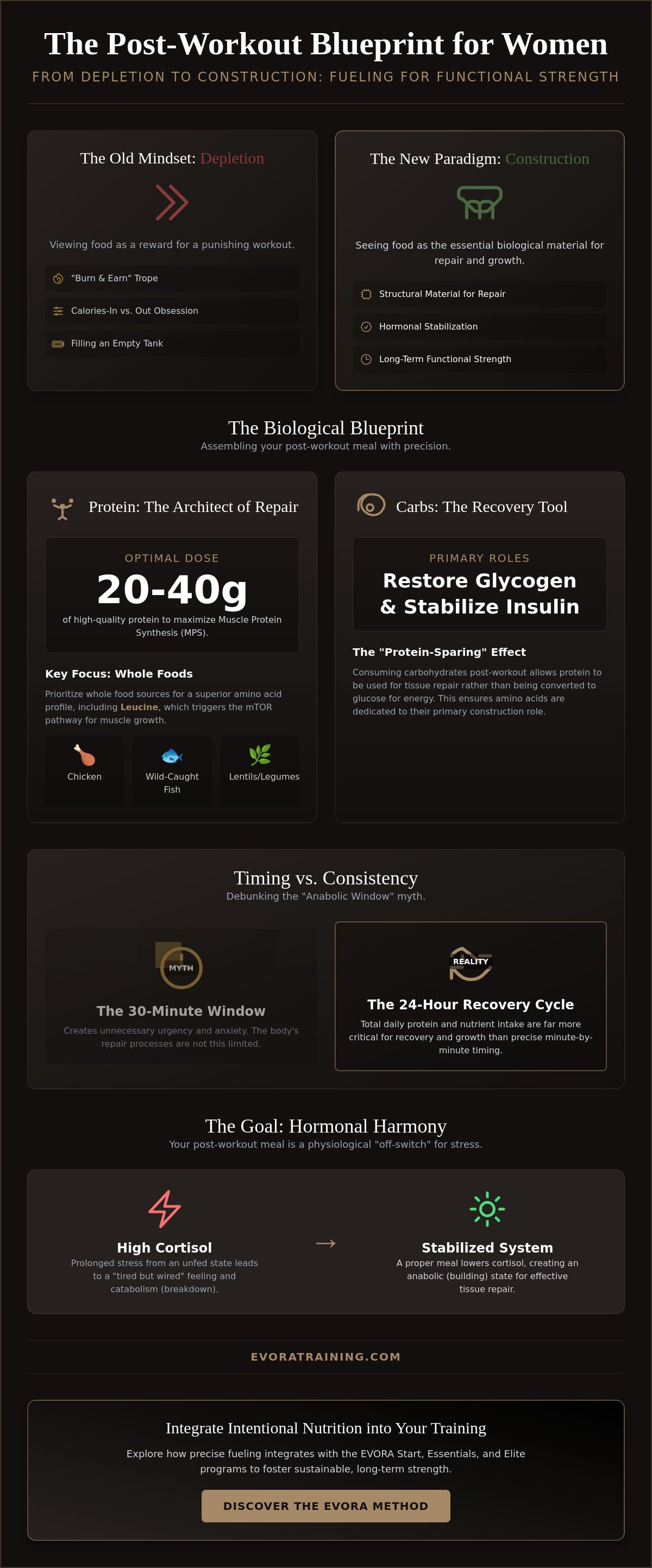
The fitness industry has long promoted the idea of a 30-minute “anabolic window,” creating a sense of urgency that often borders on anxiety. You may have felt the pressure to rush a protein shake before even leaving the gym floor, fearing that your hard work will evaporate if you don’t consume nutrients immediately. This is a misconception. While the timing of your post workout meal for women is relevant, it isn’t an emergency. The anabolic effect of exercise is a long-lasting physiological state, remaining elevated for at least 24 hours after your session.
Total daily protein intake is a far more significant driver of muscle repair and functional tone than the speed of your post-lift snack. For an active woman, maintaining a daily range of 1.4 to 2.0 grams of protein per kilogram of body weight is the true foundation of progress. This cumulative approach allows for a more rhythmic and sustainable lifestyle. It removes the stress of the “ticking clock” and replaces it with the quiet confidence of consistent, intentional nourishment throughout the day.
During a training session, your body is in a sympathetic state, often called “fight or flight.” Adrenaline is high, and blood flow is diverted away from the digestive system to support your muscles. If you force a meal or shake immediately after your final set, you’re asking a suppressed digestive tract to perform a complex task. This often leads to the bloating and discomfort many women experience with generic supplements. Waiting 60 to 90 minutes allows your nervous system to transition into the “rest and digest” phase. This shift improves gut motility and ensures that your system is actually capable of absorbing the building materials you provide. Mindful eating in this calm state nurtures your framework rather than taxing it.
Sustainable progress is built on the aggregate of your choices, not a single moment of perfect timing. For those starting beginner strength training for women, the focus should be on building a foundational habit of cumulative nutrition. Your body utilizes a 24-hour window of protein synthesis to repair tissue and build strength. One missed meal or a delayed snack won’t ruin a workout. Strength is a long-term architecture. It’s constructed through the steady, deliberate application of biological principles over weeks and months. By prioritizing consistency over frantic timing, you create a post workout meal for women strategy that feels both safe and effective for your busy life. It’s equally important to recognize when persistent fatigue or stalled progress may indicate something deeper — learning to identify the signs of overtraining in women ensures that your commitment to consistency never crosses into systemic depletion.
Transitioning from biological theory to practical application requires a structured methodology. We use the “Intentional Plate” as a foundational blueprint for structural maintenance. This framework moves away from the restrictive “salad-only” trope, which often lacks the density required to support female physiology after lifting. A balanced post workout meal for women should prioritize a ratio of 40% high-quality protein, 40% strategic carbohydrates, and 20% healthy fats and fiber. This specific arrangement ensures that your system has the building blocks for repair, the energy to restore glycogen, and the lipids necessary for hormonal health.
Your nutritional requirements aren’t static; they shift in rhythm with your menstrual cycle. During the follicular phase, when estrogen is rising, your body is often more efficient at utilizing glycogen during high-intensity sessions. This is the time to lean into your carbohydrate allocation to support performance. Conversely, the luteal phase brings a rise in progesterone and a slight increase in your basal metabolic rate. You may notice hunger spikes or cravings during this pre-menstrual window. Instead of resisting these signals, honor them by increasing your intake of anti-inflammatory fats, such as avocado or walnuts, and ensuring your protein intake remains steady to manage blood sugar fluctuations.
Hydration is the final component of this architecture. True hydration goes beyond plain water; it requires a precise balance of electrolytes including sodium, potassium, and calcium. These minerals facilitate the cellular communication necessary for muscle contraction and recovery. If you’re ready to move beyond generic templates and embrace a nutrition plan built for your unique biology, you can explore the EVORA programs to find a path that matches your current strength level. By viewing your post workout meal for women as a tool for stabilization, you mitigate workout-induced inflammation and foster long-term vitality.
Nutrition is a dynamic dialogue with your physiology. It isn’t a static list of rules. As your strength grows, your nutritional requirements must evolve to support the increasing complexity of your training. In the EVORA methodology, we view the post workout meal for women as a foundational habit that matures alongside your physical development. This synergy between intentional lifting and biological fueling ensures that you aren’t just performing movements. You’re actively constructing a more resilient version of yourself. We reject generic, high-pressure diet templates that ignore individual rhythm. Instead, we offer a logical path forward grounded in measurable progress and scientific authority.
Integrating these habits into a structured training plan moves you away from the frantic cycles of exhaustion common in the mainstream fitness industry. When your nutrition aligns with your biological architecture, you no longer feel depleted after a session. You feel capable. This transition from frustration to empowered action is the core of our philosophy. We view the body as a complex system to be understood and nurtured rather than an enemy to be conquered through restriction or punishment.
For those beginning their journey, the priority is stability. Beginners often fall into the trap of over-training while simultaneously under-eating. This creates a state of chronic depletion that stalls progress and disrupts hormonal health. It’s a cycle that leads to burnout rather than strength. In our initial phase, we focus on protein consistency as the primary building block. We encourage you to view recovery as a ritual rather than an afterthought. By securing your daily protein requirements and stabilizing your post workout meal for women, you create the safety your system needs to adapt to new stressors. This foundational work isn’t about restriction. It’s about providing the necessary materials to support your emerging strength and ensuring your energy levels remain steady throughout the day.
As you transition into EVORA Essentials and eventually EVORA Elite, your nutrition becomes a tool for precision performance. You move beyond basic consistency and begin to fine-tune your macronutrients to match specific training intensities. This phase introduces the concept of “intuitive strength.” It’s a state where you understand your body’s signals so deeply that your fueling becomes second nature. You learn to adjust your intake based on the nuances of your recovery and the specific demands of your cycle. This advanced architecture isn’t built on willpower. It’s built on the quiet confidence of an authority who has validated their methods through both research and personal experience. You are no longer guessing; you are building with intent.
Ready to build? Explore the EVORA Start program.
You’ve moved beyond the industry myths of urgent “windows” and generic refueling. By reframing your post workout meal for women as essential construction material, you honor your body’s biological architecture rather than simply reacting to depletion. We’ve explored how a precise balance of protein and carbohydrates stabilizes your hormones and repairs tissue, allowing you to recover with intention. This approach rejects the frantic energy of mainstream fitness in favor of a calm, science-backed methodology.
This philosophy isn’t just theory. It’s grounded in methods tailored to female physiology and born from personal experience. Shannon Moore developed the EVORA method after her own 110lb transformation; she proved that intentional strength is more effective than the cycle of punishment found in typical fitness templates. You don’t have to navigate this journey alone or rely on generic plans that ignore your unique rhythm. You deserve a structured approach that prioritizes your long-term well-being and functional capability.
Start building your foundation with the EVORA Start program today
Your body is a complex system that thrives when it’s understood and nurtured. Every session is an opportunity to build a stronger framework, and we’re here to help you lay the first brick with confidence.
You should prioritize nourishment even if your hunger signals are temporarily suppressed. Post-exercise adrenaline often masks the body’s need for building materials. Instead of forcing a heavy meal, wait for your nervous system to transition into a parasympathetic state. This shift usually occurs within 60 to 90 minutes. Providing a balanced post workout meal for women during this window ensures your framework has the resources to begin repair without taxing a stressed digestive system.
Whole food sources are generally superior to generic powders because they provide a complex matrix of micronutrients and fiber. While a shake offers convenience for busy schedules, it often lacks the structural density your system requires for long-term maintenance. Choosing chicken, fish, or plant-based proteins ensures a steady release of amino acids. If you use a supplement, ensure it’s a tool for convenience rather than a replacement for foundational, whole-food nutrition.
Most women require between 20 and 40 grams of high-quality protein following a strength session. This range, supported by the International Society of Sports Nutrition, provides enough leucine to trigger the biological pathways responsible for tissue repair. Your specific needs depend on your body weight and training intensity. Focusing on this target helps maintain functional tone and metabolic health, moving you away from the cycles of depletion common in mainstream fitness.
Skipping carbohydrates often leads to elevated cortisol levels and prolonged recovery times, even during fat loss phases. Carbohydrates perform a vital protein-sparing role, allowing your protein intake to focus on structural repair rather than being used for energy. Instead of total avoidance, choose strategic, whole-food sources like berries or sweet potatoes. This approach stabilizes your blood sugar and supports the hormonal environment necessary for a sustainable post workout meal for women.
Women in perimenopause should prioritize higher protein quality and anti-inflammatory micronutrients to counter shifting estrogen levels. As hormonal protection for muscle tissue declines, providing 30 to 40 grams of protein becomes even more critical for maintaining strength. Focus on leucine-rich foods and magnesium to support both muscle synthesis and nervous system calm. This intentional fueling helps mitigate the “tired but wired” sensation often exacerbated by hormonal fluctuations during this life stage.
Coffee is a stimulant that can interfere with your body’s transition into a recovery state. While caffeine has performance benefits pre-workout, consuming it immediately afterward can prolong the elevated cortisol response. Recovery requires a shift toward rest and digest rather than continued stimulation. Prioritize filtered water and electrolytes like potassium and sodium to restore cellular balance. Save your coffee for moments when your system isn’t already managing exercise-induced stress.
Late-night recovery meals should be easy to digest to avoid disrupting your sleep architecture. A combination of lean protein and a small portion of complex carbohydrates, such as turkey with a few slices of avocado, supports overnight repair without overtaxing your digestion. Avoid heavy, high-fat meals that can cause nighttime discomfort. The goal is to provide the biological signals for construction while allowing your body to enter a deep, restorative sleep cycle.
Your nutritional needs fluctuate in rhythm with your cycle’s hormonal shifts. In the follicular phase, your system is often more efficient at utilizing carbohydrates to power high-intensity work. During the luteal phase, rising progesterone can increase your metabolic rate and cravings. Adjusting your intake to include more steady protein and healthy fats during this time helps maintain stability. This hormone-smart approach ensures your recovery remains effective regardless of where you are in your cycle. If you find that fatigue, mood disruption, or irregular cycles persist despite consistent nutrition, it may be worth reviewing the signs of overtraining in women to rule out systemic depletion as an underlying factor.