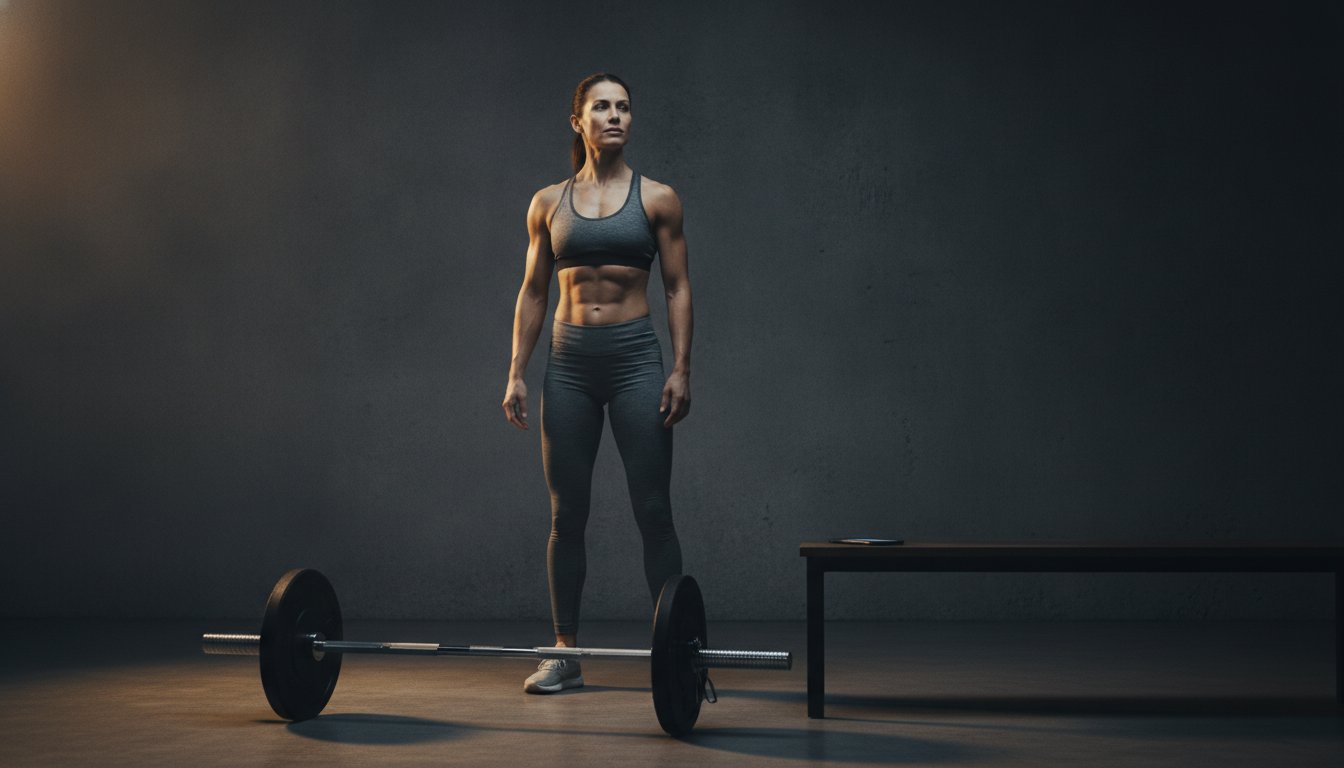

What if the missing link to your glute progress isn’t more sweat or higher intensity, but a deeper understanding of your own biological architecture? Many women dedicate hours to a dumbbell glute workout for women only to find themselves grappling with persistent lower back pain and a sense of physical depletion rather than visible growth. You’ve likely experienced the frustration of training hard during low-energy phases of your cycle, only to feel like you’re moving backward. It’s a common cycle of pursuing a temporary burn while neglecting the structural foundation your body actually requires.
This guide offers a rational alternative to high-pressure fitness tropes. You will learn how to build a powerful, functional foundation for your glutes using minimal equipment and hormone-smart training principles that respect your natural rhythms. We’re moving away from generic intensity toward a methodology focused on mechanical tension and pelvic stability. We’ll examine the specific movement patterns and volume requirements needed for sustainable development, ensuring your training feels like a deliberate act of construction rather than a path to exhaustion.
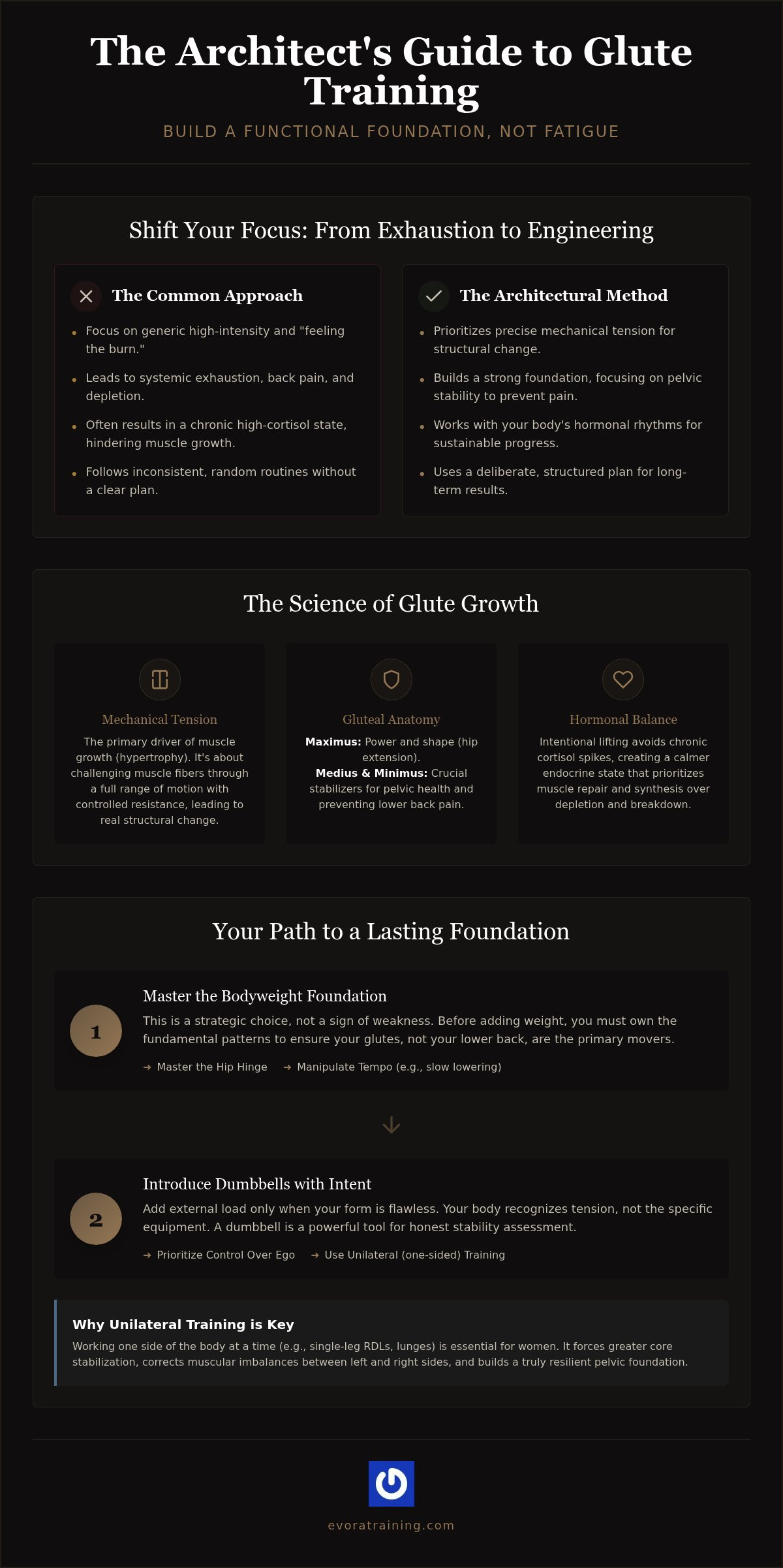
True glute development is an act of engineering. It requires moving beyond the “more is better” mindset that dominates mainstream fitness. Glute hypertrophy, or the actual growth of muscle fibers, is primarily driven by mechanical tension and progressive overload. While many programs focus on making you sweat, a truly effective dumbbell glute workout for women focuses on the quality of the load and the precision of the movement. It’s the difference between temporary inflammation and permanent structural change.
We often hear about the mind-muscle connection as a vague fitness cliché. In an intentional framework, we view it as a tool for architectural development. It’s the biological intelligence required to recruit specific motor units within the gluteal complex rather than allowing the quadriceps or lower back to compensate. When you “feeling the burn,” you’re often experiencing metabolic stress, a byproduct of exercise that doesn’t always equate to muscle construction. Building lasting strength requires tension that challenges the fibers through a full range of motion, not just high repetitions that lead to systemic exhaustion.
The gluteal complex is a sophisticated three-part system. The Gluteus Maximus provides the power and shape, primarily through hip extension. The Gluteus Medius and Minimus sit higher and to the side, acting as essential stabilizers. These smaller muscles manage abduction and rotation, keeping the pelvis level during daily life. By training across different planes of motion, you ensure each muscle is nurtured, which provides the necessary support for your lower back and hips. This stability is the cornerstone of a functional body and prevents the common aches associated with poorly structured routines.
Mainstream “high intensity” culture often triggers a chronic cortisol response. For women, elevated cortisol can actually hinder muscle synthesis by shifting the body into a state of depletion rather than construction. Intentional, steady lifting encourages a calmer endocrine environment, allowing your body to prioritize repair. Hormonal balance dictates the efficiency of muscle protein synthesis and the speed at which your body repairs the micro-tears created during a dumbbell glute workout for women. This approach treats your body as a complex system to be understood, ensuring that your efforts lead to lasting strength rather than temporary fatigue.
There is a persistent misconception that muscle construction requires a room full of heavy gym machines. This belief often serves as a barrier to entry, suggesting that your home environment is insufficient for growth. In reality, your body doesn’t recognize the brand of equipment; it only recognizes mechanical tension. A minimalist approach using a single pair of dumbbells provides a more honest assessment of your stability than a machine that dictates your path of motion. By focusing on intentional resistance, you transform your home into a space for genuine physiological development.
Starting with an at home glute workout plan no equipment isn’t a sign of weakness. It’s a strategic choice to prioritize your structural integrity. Before you introduce external load, you must master the hip hinge pattern. This ensures your glutes, rather than your lower back, are the primary drivers of the movement. You can create significant tension without dumbbells by manipulating your tempo. Slowing down the lowering phase or adding a three-second pause at the bottom of a movement forces your muscle fibers to remain active longer. If you’re ready to establish these vital patterns, our guide on beginner strength training women offers a roadmap for building your architectural foundation.
Introduce load only when your form remains unwavering through every repetition. A dumbbell glute workout for women is most effective when you prioritize control over ego. Choosing a weight that allows for a full range of motion is superior to struggling with a heavier load that compromises your pelvic alignment. Unilateral training, which involves working one side of the body at a time, is an essential tool for correcting imbalances. It’s well-documented that unilateral training requires greater core stabilization in the female pelvis to maintain hip levelness and prevent rotational compensation. This method ensures that both sides of your gluteal complex are nurtured equally.
Building this level of precision takes time and a structured plan. If you’re looking for a deliberate way to progress your training, explore the resources available at evoratraining.com to find a program that respects your long-term well-being. Moving from random exercises to a sequential routine is the most effective way to ensure your efforts lead to lasting strength.
Mainstream fitness often prioritizes depth and speed over structural integrity. This “intensity at any cost” mindset frequently leads to quad dominance, where the front of the thighs takes over during squats and lunges. When your quadriceps dominate the movement, your glutes remain under-recruited, and your progress stalls. An intentional dumbbell glute workout for women shifts the focus back to the posterior chain by emphasizing pelvic alignment and mindful foot placement. By driving through your heels rather than your toes, you create a direct line of force that engages the gluteal complex more effectively.
Your pelvic position acts as the foundation for every movement. Many women naturally fall into an anterior pelvic tilt, where the lower back arches excessively and the pelvis tips forward. This position disengages the glutes and places undue stress on the lumbar spine. Instead, strive for a neutral pelvis or a subtle “pelvic tuck” to ensure the gluteus maximus is doing the work of construction. Maintaining a neutral spine during hinges protects your lower back, transforming the exercise from a potential injury risk into a tool for building lasting power.
The hip hinge is frequently confused with the squat, yet they serve different architectural purposes. A squat is a vertical movement where the knees and hips bend simultaneously. A hinge is a horizontal movement; your hips move backward while your shins remain relatively vertical. Mastering this distinction is essential for any dumbbell glute workout for women. Common hinge errors, such as rounding the shoulders or “squatting the weight,” lead to significant lower back strain. For a deeper look at integrating these patterns into your life, explore our guide on strength training for women at home. This foundational movement ensures you are loading the hips, not the spine.
Your breath serves as the internal scaffolding for your skeleton. We utilize “360-degree breathing” to support the pelvic floor and create intra-abdominal pressure. Instead of breathing only into your chest, imagine expanding your entire torso like a balloon. This pressure provides a stable core, which is the prerequisite for a powerful glute contraction. To brace effectively during at-home movements, exhale sharply as you begin the “work” phase of the lift. This engagement synchronizes your core and glutes, ensuring your body operates as a cohesive, protected system. This biological intelligence is what separates intentional training from generic, high-pressure routines.
Building a resilient body requires a shift from chasing exhaustion to prioritizing mechanical integrity. This routine isn’t a collection of random movements; it’s a structured plan designed to nurture every facet of the gluteal complex. By following this dumbbell glute workout for women, you engage the gluteus maximus, medius, and minimus in a way that promotes both aesthetic development and functional longevity. We value the quality of each contraction over the total volume of repetitions, focusing on the body as a complex system rather than a machine to be punished.
These movements form the structural core of your training. They target the largest muscle groups to build a lasting framework for your physical health.
Accessory work addresses the smaller stabilizers that protect your joints and refine your movement patterns. These exercises ensure your gluteal architecture is balanced and resilient.
Approach your intensity with wisdom rather than aggression. We recommend leaving one to two repetitions in the tank at the end of each set. This ensures that your central nervous system remains supported rather than depleted, allowing for consistent progress across your cycle. If you’re ready to move beyond generic templates and embrace a more intentional path, explore the structured programs at evoratraining.com to find your next step. True growth happens when your training matches your biological intelligence.
A single dumbbell glute workout for women provides the stimulus, but it is only one component of a larger architectural plan. Without a sequence that respects your biological rhythms, individual sessions often become random acts of exertion rather than deliberate steps toward progress. We view strength as a foundational tool for daily life, not just a visual outcome. A well-constructed gluteal complex supports your pelvic floor, stabilizes your gait, and protects your lower back from the demands of a modern environment. This long-term perspective is what distinguishes the methodology at Evora Training from the high-pressure cycles of exhaustion found elsewhere.
Construction requires materials. Eating for strength is a rejection of the “less is more” mentality that often leads to physiological depletion. To repair the muscle architecture you build during your training, you must provide your body with adequate nutrients. Protein acts as the primary building block for muscle synthesis, while complex carbohydrates provide the energy required for precision and focus. If your nutrition is neglected, your body cannot effectively maintain the framework you’re working to build. For a deeper understanding of how to support your body, explore our guide on nutrition for strength training female.
Your journey toward intentional strength should be as unique as your own physiology. We provide a tiered roadmap designed to meet you where you are and guide you toward lasting capability. The EVORA Start program serves as the essential entry point, focusing on the foundational movement patterns and pelvic stability discussed throughout this guide. This ensures that every dumbbell glute workout for women you perform is part of a cohesive and sequential strategy. As your structural integrity improves, you can progress through EVORA Essentials and eventually EVORA Elite, each offering a more sophisticated approach to physical development.
You don’t have to navigate this process in isolation. Joining a community of women who prioritize physiological harmony over generic intensity creates a sense of partnership and shared progress. This isn’t about punishment; it’s about nurturing a body that is capable, resilient, and strong for decades to come. Discover the EVORA Start program and begin your intentional journey.
Building a resilient body is a process of deliberate construction. It requires moving past the industry’s obsession with high-pressure intensity and embracing a methodology grounded in biological intelligence. By prioritizing mechanical tension over metabolic exhaustion, you ensure that every movement contributes to your long-term structural integrity. You’ve learned that pelvic stability and a neutral spine are the prerequisites for genuine growth; they are the safeguards that prevent lower back strain and foster visible change.
Integrating a structured dumbbell glute workout for women into your home routine is the first step toward reclaiming your physical capability. This approach respects your natural rhythms and provides a sustainable path forward without the need for a traditional gym environment. Our science-backed programs are tailored specifically to female physiology, offering a roadmap that turns random effort into measurable progress. You deserve a fitness journey that feels like a partnership with your body rather than a battle against it.
Start your intentional strength journey with EVORA Start and begin building the powerful, functional foundation you were meant to have. Your strength is a tool for a lifetime of capability.
You can build significant gluteal mass and strength at home by prioritizing mechanical tension and progressive overload. While gym machines offer convenience, dumbbells require greater stabilization from the pelvic floor and core. This intentional resistance forces your muscle fibers to adapt to the load, provided you are consistently challenging them with increased weight or improved movement quality over time. It is a matter of physics rather than location.
Most women find the best results training glutes two to three times per week with at least 48 hours of recovery between sessions. This frequency allows for enough volume to stimulate hypertrophy while respecting the body’s need for repair. Training every day often leads to systemic fatigue and diminished returns, whereas a structured, rhythmic approach supports the endocrine system and ensures each session is productive and sustainable.
A combination of both is ideal, but prioritizing moderate to heavy loads that challenge you within the 8 to 12 repetition range is the standard for muscle construction. Heavier weights provide the necessary mechanical tension, while higher repetitions can increase metabolic stress. For a dumbbell glute workout for women, the goal is to choose a weight that makes the final two repetitions difficult while maintaining perfect pelvic alignment.
Adjust your stance to a glute-dominant lunge by leaning your torso slightly forward and taking a longer step. This shift increases the stretch on the gluteus maximus and reduces the vertical load on the quadriceps. Focus on driving through your front heel rather than your toes. If quad dominance persists, prioritize hip hinge movements like RDLs until your mind-muscle connection with the posterior chain improves and becomes more intuitive.
You can absolutely train during your period, though you should adjust the intensity to match your current energy levels. During the menstrual phase, some women prefer lower-volume sessions or bodyweight-only movements to avoid excessive systemic stress. Listening to your biological rhythm is a form of intentionality. If you feel capable, steady lifting can actually help manage symptoms by improving circulation and supporting a healthy hormonal balance during your cycle.
Visible structural changes typically become apparent after six to eight weeks of consistent, intentional training. Initial improvements in the first few weeks are usually neurological, as your brain becomes more efficient at recruiting the gluteal muscles. Lasting growth is a slow architectural process. By focusing on movement quality and progressive resistance, you are building a foundation that will remain resilient for years rather than seeking a temporary or superficial fix.
Supplements are not a requirement for growth, but meeting your daily protein needs is essential for repairing muscle tissue. Most women can reach these targets through whole foods like lean meats, legumes, and eggs. If your lifestyle makes it difficult to consume enough protein, a high-quality powder can be a helpful tool for convenience. Growth is ultimately driven by your training stimulus and total nutritional intake, not a specific pill or powder.
Hex-shaped rubber-coated dumbbells are often the best choice for home environments because they don’t roll and are gentler on flooring. If space is a concern, an adjustable dumbbell set allows you to progress your load without needing a full rack of weights. Regardless of the style, ensure the grip is comfortable. This allows you to focus entirely on your dumbbell glute workout for women rather than struggling with equipment that feels unstable.