
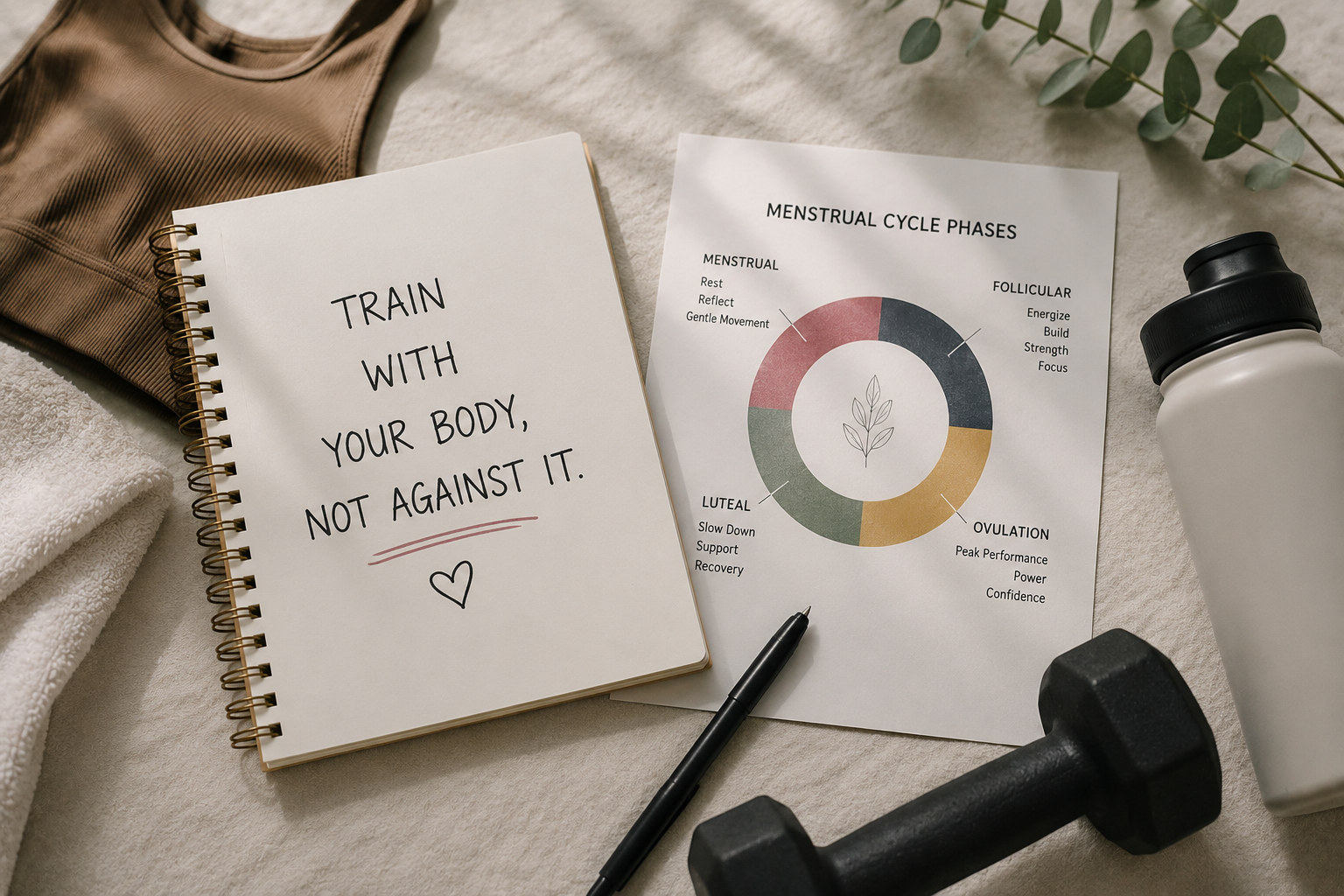
Here’s What the Science Actually Says
There’s been a huge rise in cycle-syncing content online lately.
And while I love that women’s health is finally being talked about more openly, I also think a lot of the conversation has become unnecessarily rigid.
Some influencers make it sound like women should completely change their personality, nutrition, and workout style every single week of their cycle.
For busy women already struggling to stay consistent, that can feel overwhelming fast.
The truth is more nuanced.
Your menstrual cycle absolutely can influence how you feel.
But it doesn’t mean your body is fragile or incapable.
Throughout the menstrual cycle, estrogen and progesterone fluctuate.
These hormonal shifts may influence:
Some women genuinely feel stronger during certain phases. Others notice they need slightly more recovery before their period.
Both experiences are normal.
What’s important is learning how your body responds instead of forcing yourself into rigid rules created for social media.
If you’ve spent any time on wellness TikTok lately, you’ve probably heard someone say:
“You should only do Pilates during your luteal phase.”
Or:
“Never strength train during your period.”
Or:
“You should completely change your workouts every week of your cycle.”
And honestly? The internet has made this way more complicated than it needs to be.
Hormonal changes throughout your menstrual cycle absolutely can impact:
That part is real.
Some women feel incredible during certain phases. Others feel more fatigued before their period.
But current research does not strongly support the idea that women must completely change training styles throughout the month.
The most important thing is learning how your body responds.
Not blindly following generalized cycle-syncing rules online.
For example:
All of those experiences are normal.
Instead of rigid “cycle syncing,” I prefer flexible structure.
That means:
The goal is consistency over perfection.
Your cycle should inform your training — not control it.
One thing I’m passionate about is helping women understand that our bodies are not “broken.”
Women have historically been underrepresented in exercise science research.
That’s changing now.
But unfortunately, social media often takes tiny pieces of emerging science and turns them into rigid rules.
You do not need a completely different personality every week of your cycle.
You just need awareness, flexibility, and a sustainable routine.
Helping busy women build strength, confidence, and sustainable habits through realistic training and nutrition.

Explore the Personalized Program designed for real women and real results.
A simple, realistic guide to help you start strength training with confidence, build consistency, and stop guessing.
By subscribing, you agree to receive emails from Evora Training. Unsubscribe anytime.